Contact
On our page you will find a multitude of information that may be of your interest. If you have any questions, do not hesitate to contact our team:
Articles
and news

UNE-EN ISO 8199 provides general requirements and guidance for performing the microbiological analysis of water using culture-based techniques. It covers the common operations involved in these methods, including sample preparation, culture media and laboratory equipment, as well as the techniques available for detecting and enumerating microorganisms.
This framework can be applied to the analysis of drinking water, water from industrial processes, wastewater and recreational water whenever it is necessary to identify or quantify microorganisms such as bacteria, viruses and fungi.
An example of a procedure for preparing and analysing samples includes the following steps:
Sample collection and preparation must be carried out under conditions that minimise the risk of external contamination and preserve the representativeness of the water being analysed. After concentrating the microorganisms, the resuspended sediment can be used in the microbiological techniques selected according to the type of sample and the analytical objective.
The centrifugation of water samples can be used to concentrate sedimentable microorganisms present in a limited volume. This operation is particularly useful when the initial microbial concentration is low and may make subsequent detection or quantification using microbiological methods more difficult.
During the process, particles and microorganisms capable of sedimenting under the applied centrifugation conditions move towards the bottom of the container. After removing the supernatant and resuspending the sediment, a concentrated fraction is obtained that can be used in subsequent operations, such as inoculation onto culture media, incubation and colony counting.
Centrifugation also allows some of the suspended solids present in the sample to be separated. However, certain microorganisms may be associated with these particles and sediment together with them. For this reason, the centrifugation conditions must be selected according to the type of microorganism, the nature of the sample and the microbiological method being applied.
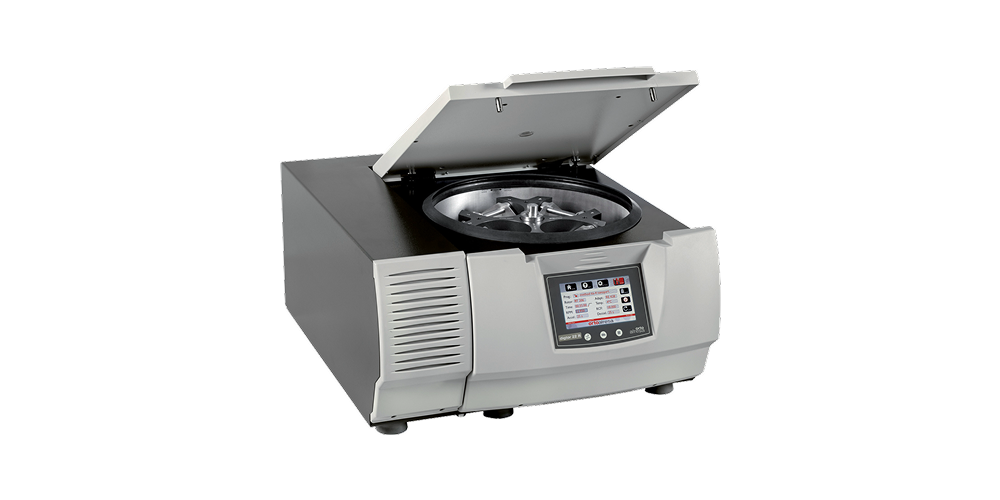
For this application, the Ortoalresa Digtor 22 centrifuge offers a maximum capacity of 4 × 750 mL, depending on the rotor and adapters installed. This configuration makes it possible to work with the sample volumes of 100 to 500 mL described in the procedure, facilitating the concentration of microorganisms present in the water before microbiological analysis.
If you wish to receive our latest news periodically, do not hesitate to subscribe to our Newsletter.
* Required fields. These fields must be completed to submit the form. Thank you
I have read and accept the privacy policy of the Company.
I agree to receive your commercial communications
On our page you will find a multitude of information that may be of your interest. If you have any questions, do not hesitate to contact our team:



Álvarez Redondo S.A.

Los Frailes, 121 Pol. Ind. Los Frailes. 28814 Daganzo. Madrid – SPAIN
This website complies with the GDPR standards and regulations. We use cookies to improve your browsing experience.
www.ortoalresa.com

© 2021 Ankaa Studio


